

Municipal Solid Waste (MSW) has become a challenge for Urban Local Bodies (ULBs) throughout the world. Depending upon the country spending capacity; every nation generates a different quantity per capita of MSW. Third world countries generate 250 grams per capita per day, whereas developed nations generate up to 2000 grams per capita per day.

MSW composition is variable, with moisture as the most challenging aspect when it comes to the development of a business model for sustainable practices, so there is an urgent need to develop sustainable alternatives for MSW from outdated landfills and even sanitary dump sites.
Generally, MSW projects are subsidized or publically funded. The cost to local governments / municipalities continues to rise with little or no hope for cost recovery. However, waste can be a valuable resource. This is already demonstrated in certain countries.
UNEP states that worldwide, there is a growing need for sustainable and coherent solutions to solid waste management problems. MSW seems to be more complex in developing and transitional countries, where the increase volume and type of wastes, as a result of economic growth, urbanization and industrialization, is becoming a burgeoning problem for national and local governments, making tougher to ensure an effective and sustainable management of waste ‘( WTE /Inter-American Development Bank handbook )
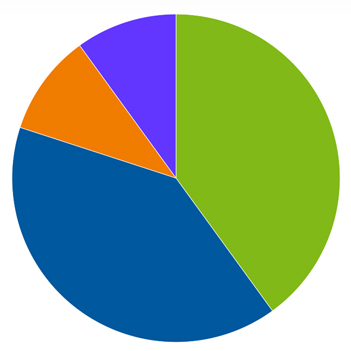
| Color | PARTICULARS | % | RANGE, % |
|---|---|---|---|
| ORGANIC | 40 | 30 - 50 | |
| MOISTURE | 40 | 30 - 65 | |
| MIXED PLASTICS, PAPER, TEXTILE, FOOT WEAR ETC | 10 | 08-20 | |
| INERT, METAL GLASS | 10 | 05 - 15 |
Our focus at IEC Technologies is the generation of "smart" energy from MSW resources, which has all been made possible by the meticulous R&D behind our organic bio-drying agent and combined, with our 40 years of energy producing systems. We do not claim to have all the answers rather we hope that we can help to contribute and make this nuisance to ULB be a thing of the past












 IEC Technology in MSW